
Meal Planning for Families: A Simple, Low-Waste Weekly Guide
A simple weekly routine for meal planning for families: plan three or four dinners, use what's in, plan leftovers and shop from a list that cuts waste.

Meal planning for families can be as simple as setting aside a little time each week. Choose a planning day, see what food you already have, pick three or four dinners and leave one night for leftovers. Then make your shopping list. This is the basic approach recommended by UPMC HealthBeat and Community Meals of West Michigan.
There is no need to plan every meal or get everything right. Graciously Nourished points out that even a loose routine can help. What matters is finding something that fits your family.
Prefer keeping a paper plan on the fridge? See our planner picks below.
Why plan at all?
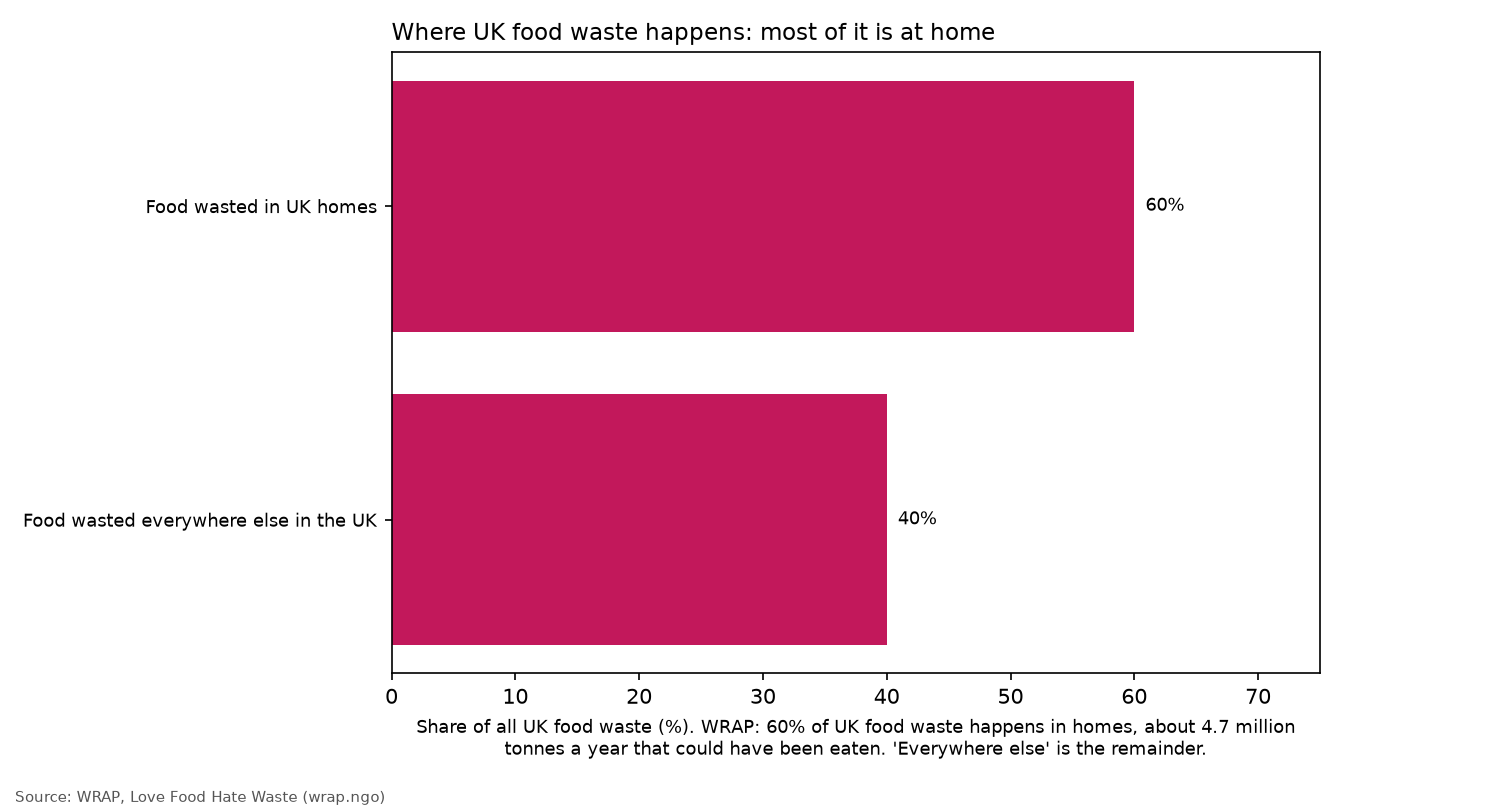
A lot of food waste starts in our kitchens. According to WRAP, 60% of the food wasted in the UK comes from our homes. That amounts to 4.7 million tonnes of food a year that could have been eaten.
A little planning can also make everyday meals less stressful. Love Food Hate Waste says that simple weekly food habits can save time and money while making shopping, preparation and cooking easier to manage.
The 30-minute weekly routine
- Pick a planning day. Sunday suits many families, according to Community Meals of West Michigan.
- Check what is already in. Have a quick look through the fridge, freezer and cupboards before deciding what to cook. This is the first step recommended by Sunny Side Up Nutrition.
- Plan three or four dinners. There is no need to tackle the whole week at once. UPMC HealthBeat recommends starting with just three or four.
- Add theme nights if they help. Meatless Monday, Taco Tuesday or Pizza Friday can make deciding what to cook a little easier (CMW).
- Mark your busy nights. Look at when clubs, late shifts and activities are happening. Save your quickest meals for those evenings.
- Leave a leftovers night. Think about which dinners could provide another meal later in the week (UPMC).
- Write your list by aisle. Note the ingredients for each dinner. Making the list in the kitchen means you can check what is already in the cupboards as you go (UPMC).
- Set a budget before you shop (Love Food Hate Waste).
Your printable planner
Use these two tables to put your weekly plan together. Copy or print them, then fill them in on your chosen planning day.
Weekly planner (fill in on your planning day)
| Day | Who's home / busy night? | Dinner | Uses up what's already in | Leftover plan | Child prep job |
|---|---|---|---|---|---|
| Monday | |||||
| Tuesday | |||||
| Wednesday | |||||
| Thursday | |||||
| Friday | |||||
| Saturday | Leftovers or go-to meal | ||||
| Sunday (planning day) |
Example row (to show how it works, not a recommendation): Wednesday | Busy: after-school club | Veggie chilli (NHS Healthier Families recipe) | Tin of beans, half a pepper | Freeze two portions | Rinse the beans
Shopping list grouped by aisle
| Aisle | Items |
|---|---|
| Fruit and veg | |
| Fridge (dairy, meat, fish) | |
| Freezer | |
| Cupboard (tins, pasta, rice) | |
| Bakery | |
| Household |
Tip from Love Food Hate Waste: set your budget before you shop and tick items off as you buy.
Busy nights and leftovers
It is often the busiest evenings that throw a meal plan off course. Having a backup ready makes those nights easier to handle.
- Keep a go-to meals list. Write down a few dependable dinners you can turn to when plans change, and keep that list handy for last-minute evenings. That is what Sunny Side Up Nutrition recommends.
- Batch your prep. Chop the week's onions together, or brown enough mince for two meals while the pan is already hot (Colorado State University Extension).
- Cook grains ahead. Keep them in the fridge or freezer so they are ready for meals later in the week (UPMC).
- Freeze portions and odds and ends. Save small amounts of leftovers in the freezer throughout the week. They can be turned into soup, nachos or pizza toppings later (CSU Extension).
For a meal you can make in larger quantities, try the NHS Healthier Families veggie chilli. It freezes well, and the same page has seven simple family meals if you are short of ideas.
Getting children involved
Children may be more willing to follow a meal plan when they have helped choose what's on it. Community Meals of West Michigan recommends asking everyone for suggestions, especially children. It also gives them a chance to learn how meal planning works.
- Give a small prep job. Washing vegetables or rinsing beans is an easy place to start. Put the plan on the fridge so everyone can see what is coming up and where they might help (CSU Extension).
- Include something they will eat. Make sure each meal includes at least one familiar food your child will eat, even if that is simply the rice, as Sunny Side Up Nutrition suggests.
Dealing with fussy eating? Read how to get a picky eater to eat.
Shopping smart
Once the meals are planned, the next step is buying what you actually need. These habits from Love Food Hate Waste can help:
- Take your list. Keep it in your phone notes, or take a photo of the dry-wipe list on the fridge before leaving.
- Set a budget and stick to it.
- Sense-check special offers. A discount is not a saving if you did not need the item in the first place.
- Tick items off as you buy.
CSU Extension describes this as intentional shopping. You decide what you need beforehand, then buy what is on the list.
Planner picks
We may earn a commission if you buy through links on this page. It never changes our verdicts. How we review.
Clear Mind Concepts Magnetic A4 Weekly Meal Planner
A good fit for families who prefer to plan every meal, not just dinner. According to the listing, it has space for breakfast, lunch, dinner and snacks across all seven days. There is also a perforated tear-off shopping list, 52 undated 120gsm sheets, a wide magnetic backing, a home essentials checklist and a stick-on pen loop.
It may be more than you need if you only plan evening meals, particularly if there is not much room on your fridge for an A4 sheet.
SOL Weekly Meal Planner Magnetic
This is a smaller pad than the A4 planner. The listing's product description gives the size as 29 x 17 cm, while the product information table lists the sheet as A5 (about 21 x 14.8 cm). It has sections for breakfast, lunch, dinner and snacks from Monday to Sunday, along with a shopping list area. The pad includes 52 tear-off sheets and a magnetic backing.
On the listing, some buyers say the magnet is weak and the pad feels small. It may not be the best choice if you like to write detailed plans.
Pyrex Cook & Freeze set of 4 glass dishes
These are for the cooking and leftovers side of meal planning rather than writing the plan itself.
The listing describes four borosilicate glass dishes in 0.8, 1.5, 2.6 and 4 litre sizes. They come with airtight BPA-free lids and can go from freezer to oven. The dishes are suitable for oven and microwave use without their lids, are dishwasher-safe and nest together for storage.
They make more sense for batch cooking and freezing portions than for someone simply looking for a weekly planner.
FAQ
How do you start meal planning when you feel overwhelmed?
Keep it small to begin with. UPMC HealthBeat recommends choosing three or four dinners during one weekly planning session. Check the food you already have, note which ingredients are missing and use those to make your shopping list. As Graciously Nourished explains, even a loose routine can make a difference.
How many dinners should a family plan each week?
Start with three or four, as UPMC recommends. This gives you space for a leftovers night and a reliable backup meal when the evening does not go as expected. Keeping a list of those go-to meals is worth doing, as Sunny Side Up Nutrition suggests. Once planning becomes a habit, you can cover more evenings if you want to.
How can a family meal plan on a budget?
Begin by checking the fridge, freezer and cupboards to avoid buying things you already have. Love Food Hate Waste recommends setting a shopping budget, sticking to it and thinking carefully about special offers. Something you do not need is not a saving, even when it is discounted. Buy what is on your list rather than adding extras.
How do you make a shopping list from a meal plan?
Write down the ingredients needed for each dinner. UPMC suggests doing this in the kitchen, where you can check the fridge and cupboards at the same time. Cross off anything you already have, then organise the remaining items by aisle using the table above. You can take the list on your phone or photograph it before shopping.
What should you do with leftovers on busy nights?
Give leftovers a place in the plan from the start (CMW). Freeze a couple of portions when you make a batch meal, so you have dinner ready for another evening. CSU Extension also suggests freezing smaller leftovers for soups, nachos or pizza toppings. Setting aside a leftovers night helps clear the fridge too.
Can a child help with meal planning?
Yes. Community Meals of West Michigan encourages families to ask children what they would like included, helping them understand how planning works. They can also take on a simple preparation job, such as rinsing beans. Including something children will eat with each meal, even if it is only the rice, is what Sunny Side Up Nutrition recommends.
What are good emergency store-cupboard meals?
Start with meals your family already enjoys. A short list of familiar go-to dinners helps on evenings when plans change unexpectedly, which is what Sunny Side Up Nutrition recommends. If you need more ideas, the NHS Healthier Families dinner recipes include seven simple meals with ingredients you can swap.
Ready to give it a go?
Fill in the weekly planner on your next planning day, or see our planner picks if you would rather keep a pad on the fridge.
More from us: Family · How to get a picky eater to eat · Homeschool · About us · How we review