
How to Get a Picky Eater to Eat Without Mealtime Battles
How to get a picky eater to eat, calmly: structured meals, a safe food on every plate, food bridges and a 2-week exposure planner.
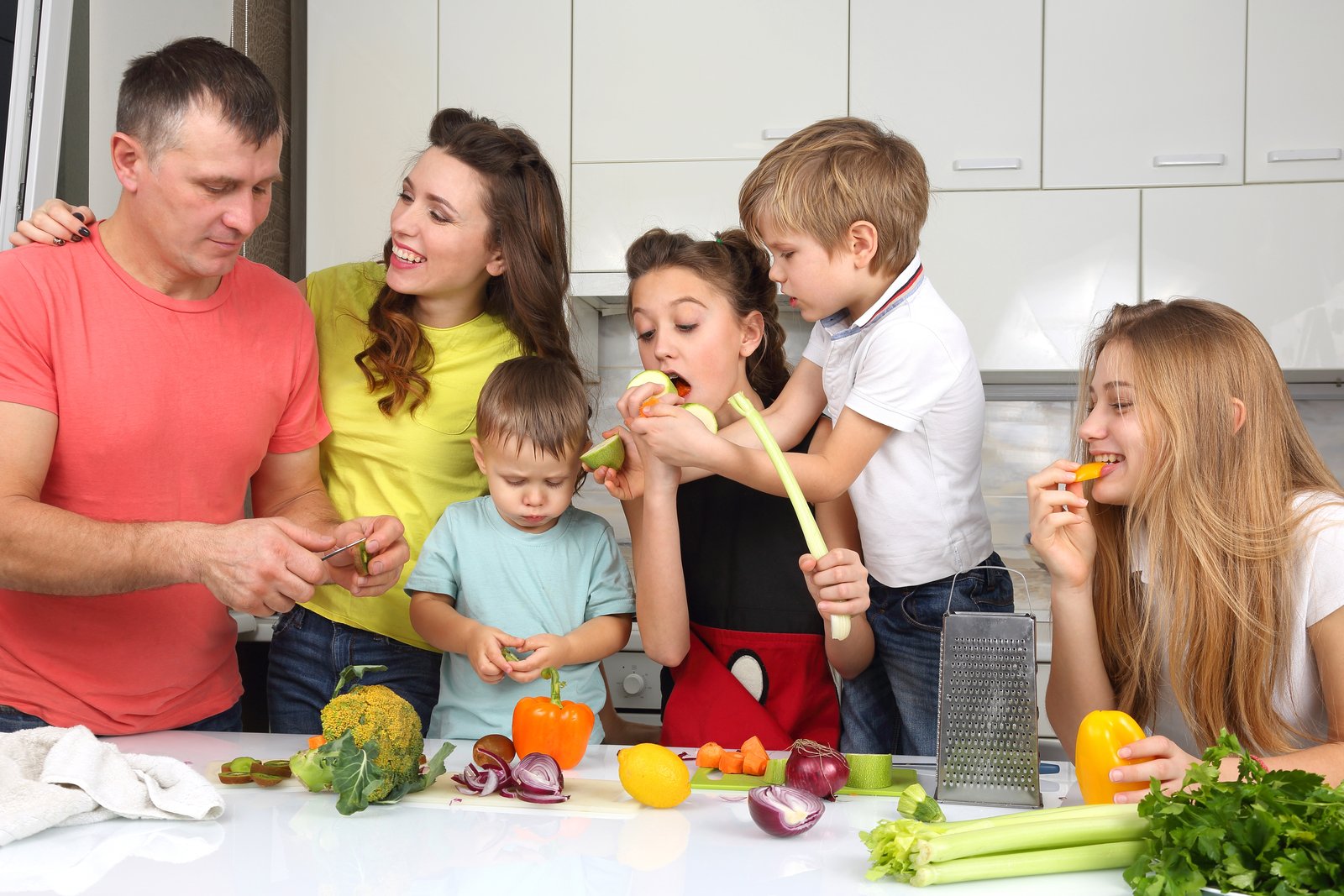
If you are wondering how to get a picky eater to eat, start by taking the pressure off. Offer regular meals and snacks, serve one family meal that includes a food the child already eats, and keep offering tiny portions of new foods without making a fuss. Leave out the bribes and food rewards.
Start with the food bridges table and 2-week planner below tonight.
This guide draws on advice from the NHS, the American Academy of Pediatrics, the CDC and a registered dietitian. You can read more about us and how we review. This is general information, not medical advice.
Why children get picky
Picky eating is common, and for most children it is a phase. Growth slows after infancy, so toddlers' appetites drop, the AAP explains.
Wariness of new foods is normal too: toddlers often refuse them, says the NHS. The CDC also notes that children may favour just a few foods or dislike having different foods touch on their plate.
This phase commonly happens between about age 2 to 4 and often goes away by about age 5. A paediatrician and dietitian writing for the AAP calls it normal and usually short-lived.
Look at the bigger picture, not every unfinished plate. The NHS recommends considering what a child eats over a whole week instead of one day. If they are active, gaining weight and seem well, they are getting enough.
What to do at meals, step by step
- Use the Division of Responsibility. Registered dietitian Ellyn Satter's approach gives adults and children different jobs. The adult decides what food to offer, when to serve it and where to eat. The child decides whether and how much to eat.
- Set a rhythm of meals and snacks. Stick to regular, structured meals and snacks. Satter recommends sit-down snacks with water in between. This helps children arrive at meals ready to eat.
- Serve family-style where you can. Put the dishes on the table and let children help themselves. The CDC recommends offering choices, and serving themselves gives children some say.
- Put a safe food on every plate. Make sure the meal includes at least one food the child likes. Satter suggests including one or two foods they usually eat.
- Keep new foods tiny. Small portions are best, according to the NHS. One or two pieces is enough.
- Let them leave it. There is no need to insist they try something. Avoid forcing food or mealtime battles.
- Eat together. Eating alongside an adult they like can help, the NHS says. The CDC also suggests sitting down with them and eating the same food.
It can help to pair something unfamiliar with a favourite. The AAP recommends offering new or bitter foods alongside familiar ones. Broccoli with grated cheese is one example.
Food bridges: small steps from foods they already eat
The AAP recommends using "food bridges" to move from something a child already accepts to something new with a similar colour, flavour or texture.
| Already eats | Bridge step 1 | Bridge step 2 | Bridge step 3 | Why it works |
|---|---|---|---|---|
| Pumpkin pie (AAP example) | Mashed sweet potato | Mashed carrot | Roast carrot sticks | Same orange colour and soft texture |
| Pancakes | French toast | Scrambled egg | Omelette strips | Same eggy flavour, soft texture |
| Plain pasta | Pasta with butter and cheese | Pasta with a few peas | Pasta with tomato sauce | Same base, one small change at a time |
| Chips | Oven potato wedges | Roast potato | Roast parsnip | Same shape and crunch |
| Apple slices | Pear slices | Melon pieces | Grapes, halved lengthways | Similar sweet, juicy fruit |
| Cheese on toast | Cheese and ham toastie | Cheese and tomato toastie | Pizza with vegetables | Familiar melted cheese |
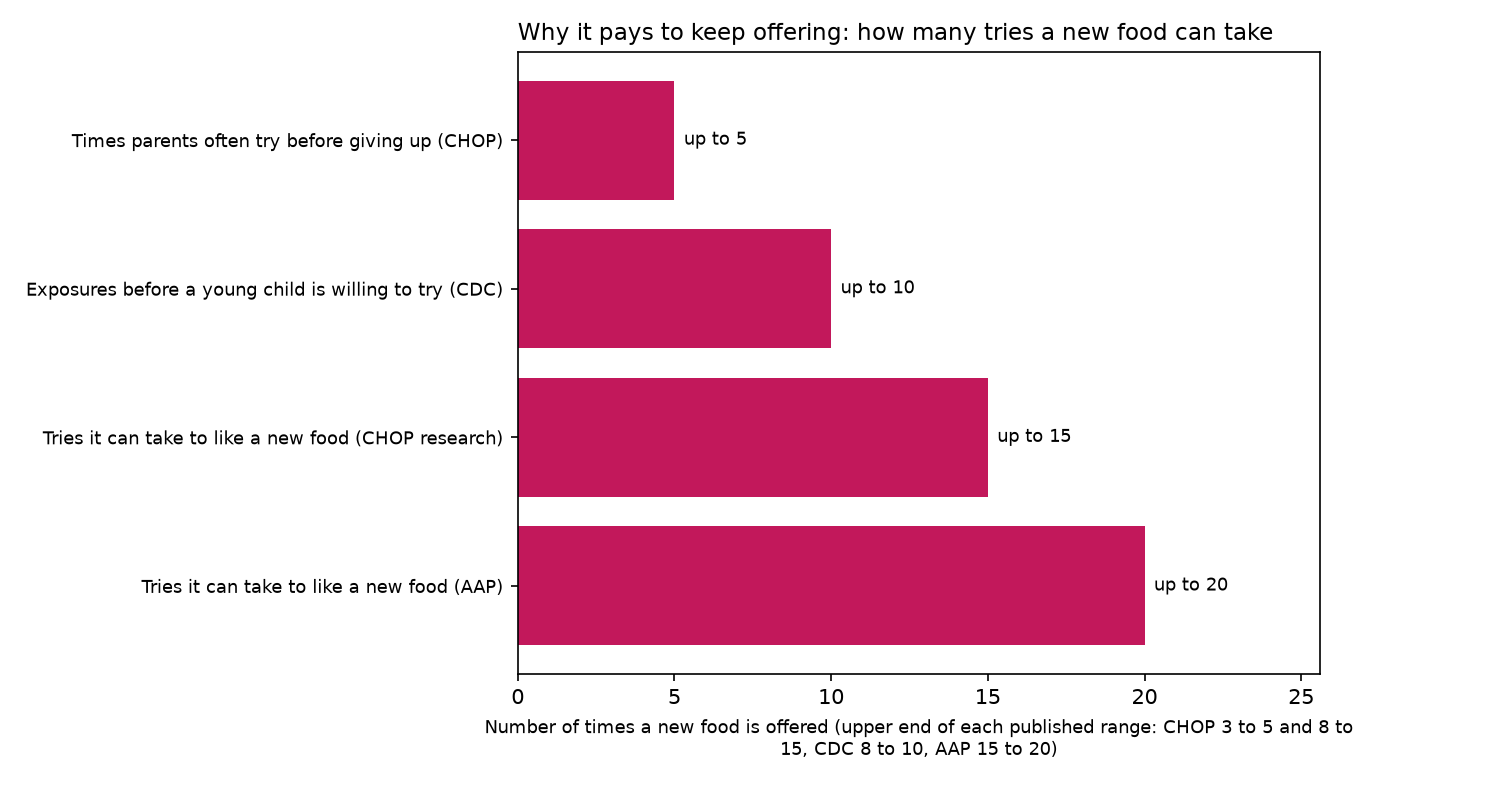
Do not expect a new food to be accepted straight away. The CDC says it can take 8 to 10 exposures, while the AAP suggests 15 to 20 tries. Yet CHOP notes that parents typically stop trying after just 3 to 5.
The 2-week low-pressure exposure planner
Offer one new food in a tiny portion alongside something the child already eats. No comments, no pressure, and it is fine if they leave it.
| Day | New food | Tiny portion | Served with a safe food | No-pressure note |
|---|---|---|---|---|
| 1 | Bridge step 1 | 1 or 2 pieces | Yes | Adult eats it too |
| 2 | (rest day) | |||
| 3 | Bridge step 1 | 1 or 2 pieces | Yes | Let the child serve themselves |
| 4 | (rest day) | |||
| 5 | Bridge step 1 | 1 or 2 pieces | Yes | Talk about colour or crunch, not eating |
| 6 | (rest day) | |||
| 7 | Bridge step 1 or 2 | 1 or 2 pieces | Yes | Cook or wash it together |
| 8 to 14 | Repeat the pattern with step 2 | 1 or 2 pieces | Yes | No rewards, no "one more bite" |
Rest days keep things relaxed. The CDC suggests waiting a week before offering a refused food again to a young child, so spacing out attempts is fine too.
What to avoid
Cooking a separate meal. The AAP and Satter both advise against making another meal for a picky eater. Include a safe food in the family meal instead.
Bribes and food rewards. The NHS advises against using food as a reward. Offer a trip to the park or a game instead, and praise eating.
Hiding food as the only plan. Satter advises not to deceive children about what they are eating. Cooking vegetables into a dish is fine, but serve them where children can see them too.
"One more bite" rules. Satter warns against forcing a number of bites, cheer-leading or punishment. The NHS says to keep mealtimes enjoyable.
Getting children involved
Handling food away from the table is a low-pressure way to get to know it, which is why the planner includes a day for cooking or washing food together. A few easy ways in:
- Shopping: let the child choose between two vegetables, in line with the CDC's advice to offer choices.
- Washing: give them a colander and let them rinse fruit and vegetables.
- Younger children: try tearing lettuce, stirring a cold mixture or adding toppings to a pizza.
- Older children: let them measure ingredients, mix and follow a simple recipe with an adult nearby.
There is no need to turn these into a tasting session.
For more practical ideas, browse the learning and family sections.
When to talk to your GP or health visitor
In the UK, speak to your GP or health visitor (in the US, your paediatrician) if a child:
- is losing weight, or does not seem active and well (the NHS uses active, gaining weight and well as signs a child is getting enough)
- avoids many foods or eats only very small amounts
- seems afraid to eat, for example after choking or vomiting
- or if anything else worries you.
The AAP recommends speaking to a doctor if you have concerns about a child's diet. Very restrictive eating can sometimes be ARFID. Beat explains that ARFID can affect people of any age or weight. Your GP is the first point of contact and can refer a child to children's eating disorder services or CAMHS.
Books that can help
We may earn a commission if you buy through links on this page. It never changes our verdicts. How we review.
-
Helping Your Child with Extreme Picky Eating (Katja Rowell, Jenny McGlothlin): a book for parents whose children are very selective about food.
Check price on Amazon -
Child of Mine (Ellyn Satter): a fuller explanation of the Division of Responsibility approach. This link goes to the Kindle edition; the paperback is sold by other sellers.
Check price on Amazon -
How to Get Your Kid to Eat: But Not Too Much (Ellyn Satter, paperback): Satter's practical guide to feeding children without pressure.
Check price on Amazon -
I Will Not Ever Never Eat a Tomato (Lauren Child): a Charlie and Lola picture book for children aged about 3 to 5.
Check price on Amazon -
Gregory, the Terrible Eater (Mitchell Sharmat): a picture book exploring food preferences.
Check price on Amazon -
Green Eggs and Ham (Dr. Seuss): the classic story about giving something new a try.
Check price on Amazon -
The Ultimate Children's Cookbook (DK, hardback): a book for cooking together with children aged about 6 and up.
Check price on Amazon
FAQ
Is picky eating normal, and when does it stop?
Yes, picky eating is common. It often happens between about age 2 to 4 and usually goes away by about age 5.
How many times should you offer a new food?
The CDC suggests 8 to 10 exposures, CHOP cites 8 to 15, and the AAP says 15 to 20 tries.
Should you cook a separate meal for a picky eater?
No. Both the AAP and Satter recommend serving one family meal with at least one food the child already eats.
Is it OK to hide vegetables in food?
Cooking with vegetables is fine, but do not rely on hiding them. Satter advises not deceiving children about food. Offer vegetables where children can see them as well.
Are rewards or 'one more bite' rules a good idea?
No. The NHS advises against using food as a reward. Satter also recommends avoiding bribes, rewards and rules about how many bites a child must eat.
When is picky eating a concern, and when should a child see a GP?
Speak to a GP or health visitor if a child is losing weight, avoids many foods or eats very little, or seems afraid to eat, for example after choking or vomiting. Beat has information about ARFID and recommends starting with your GP. In the US, parents can speak to their paediatrician, as the AAP advises.
The calm way forward
Picky eating usually passes. Regular meals, patience and a familiar food on the plate take the stress out of it.
Choose one row from the food bridges table, begin the 2-week planner tonight and give it time.